



The upcoming session “Women in the History of Medicine” at the Libori Summer School 2026 builds on an already well-established research focus at the Center for the History of Women Philosophers and Scientists. Over the past years, the Center has hosted a series of events dedicated to women’s contributions to medical knowledge, embodiment, and healing practices—most notably through its New Voices Talk Series in collaboration with the Center for the Study of Medicine and the Body in the Renaissance (CSMBR) in Pisa.
If you missed these events, some recordings are available on our YouTube channel: https://youtube.com/playlist?list=PLk7u6-nmv4F7QMT4aiaVXtMYT0_vpwwR8&si=vg47sO9HcLTZ_tAF
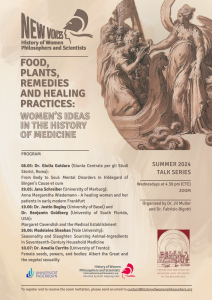
 The 2024 series, “Food, Plants, Remedies and Healing Practices: Women’s Ideas in the History of Medicine,” explored the relationship between natural knowledge, embodiment, and healing. Contributions ranged from analyses of Hildegard of Bingen’s medical writings and their conceptualization of mental disorders, to case studies of early modern healers such as Anna Margaretha Wiedemann, as well as investigations into household medicine, animal-based remedies, and the epistemic status of experiential knowledge.
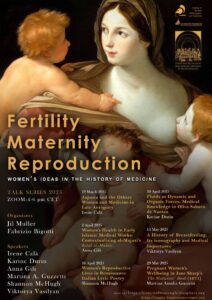
The 2025 series, “Fertility, Maternity, Reproduction: Women’s Ideas in the History of Medicine,” shifted the focus toward reproductive knowledge and practices. It examined women’s roles in gynaecology, midwifery, and medical authorship across different historical and cultural contexts—from Late Antiquity and early Islamic medicine to Renaissance lyric poetry and early modern medical treatises. These contributions highlighted not only the transmission of medical knowledge but also the often-overlooked epistemic authority of women as practitioners, patients, and authors.
 A central figure in developing this research area at the Center is Dr. Jil Muller, Deputy Head of the Center for the History of Women Philosophers and Scientists and Assistant Professor of Philosophy at Paderborn University. Her research focuses on early modern philosophy, with particular attention to moral theory and conceptions of the human being in society, especially in the works of figures such as Marie de Gournay, Sophie Germain, Gabrielle Suchon, and Émilie du Châtelet.
A key aspect of her work lies in the interdisciplinary nexus of medical and anatomical theory, humanism, and moral philosophy in the early modern period. By bringing these domains into dialogue, she contributes to a more nuanced understanding of how conceptions of the body, knowledge, and ethical life were historically interconnected.
Her research profile and further information can be found here:
https://historyofwomenphilosophers.org/jil-muller/
You cannot copy content of this page