



Voluntarism in Susan Stebbing by Andreas Vrahimis:
In her earliest writings, Stebbing (1913, 1914) broadly defines “voluntarism” as the thesis that “will is more fundamental than intellect” (1914: 13), which can have psychological, metaphysical, and epistemological manifestations. Voluntarists tend to reject determinism in preference to “radical contingency” (4). They also criticise the intellect’s limited epistemic capacities, appealing instead to various non-intellectual methods for acquiring knowledge. Stebbing (1914: 130-131, 161-162) distinguishes three types of voluntarist methodologies: (i) appeals to intuition (e.g. within French “spiritualism”), (ii) appeals to extra-rational choice (e.g. Pascal’s wager, James’ “will to believe”, or Renouvier’s “moral method” (Stebbing 1914: 161)), and (iii) appeals to action (e.g. Séailles’ and Guyau’s “philosophie des idées-forces”). […]
Read the full article about voluntarism in the ECC and find out more about Susan Stebbing in the Directory. You can also listen Andreas Vrahimis talk on Susan Stebbing at 2024 HOPOS Conference in Vienna.
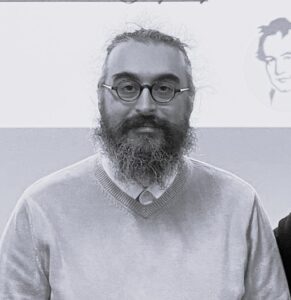
Andreas Vrahimis is a philosopher and historian of twentieth-century philosophy whose research focuses on the history of analytic philosophy and its relations to so-called Continental traditions. In his recent monograph Bergsonism and the History of Analytic Philosophy, he examines figures such as L. Susan Stebbing and Karin Costelloe-Stephen in debates about Bergson’s reception. He has also published widely on the analytic–continental divide and on aesthetics and the philosophy of art.
Get in touch with Andreas Vrahimis and other researchers with the Find Scholars tool.
You cannot copy content of this page